
Custom Medals: What to Decide Before the Die Is Cut
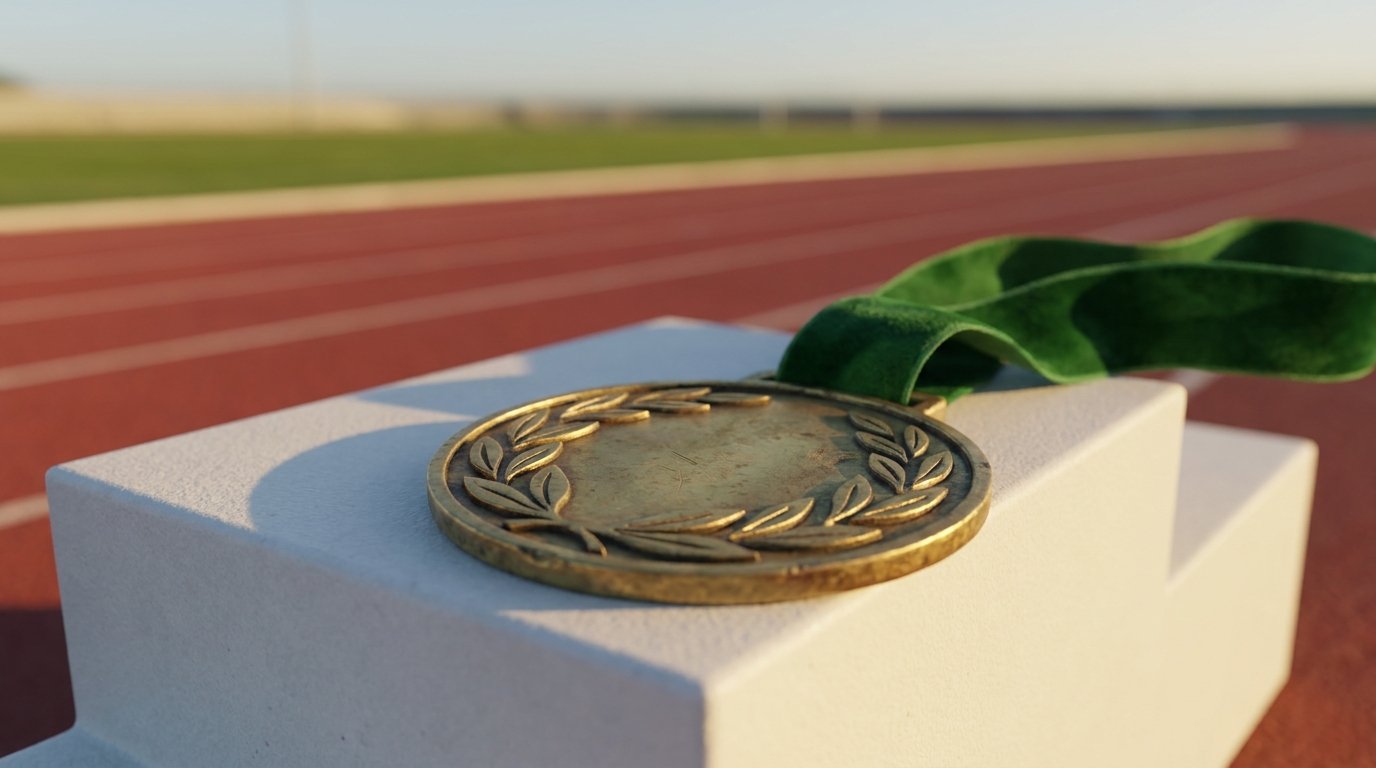
Custom medals are made to order from their own tooling, an engraved steel die or a casting mould, so their shape, relief, colours and ribbon are designed for one event. Stock medals come ready-made and are personalised with an insert or engraving.
This guide is for federations, clubs, race organisers and companies ordering several hundred to several thousand medals for a championship, tournament, anniversary or race. It explains how custom medals are made, which choices the tooling fixes, what drives the cost and how to plan back from the event date.
Key Takeaways
- Custom medals are struck from engraved steel dies for crisp, coin-like detail, or die-cast in zinc alloy for sculpted 3D relief, cut-outs and irregular outlines.
- The outline, relief, colour recesses and ribbon attachment are part of the tooling, so settle them before the sample. Changing them later usually means reworking the tool.
- Plating is a thin layer, even on an Olympic gold medal, so specify colour, finish and thickness in microns.
- On average, a sample takes 2 to 3 weeks and mass production about 4 weeks, depending on complexity and volume. Shipping and a buffer come on top.
- Below a few hundred pieces, a stock medal with a custom insert is usually the better buy.
In This Article
- Key Takeaways
- Custom or Stock Medals: Which Do You Need?
- How Are Custom Medals Made?
- Which Design Choices Shape a Custom Medal?
- Which Plating and Finish Should You Choose?
- How Do You Specify Ribbons, Engraving and Packaging?
- What Drives the Cost of Custom Medals?
- How Far Ahead Should You Order Custom Medals?
- What Should a Custom Medal Brief Include?
Custom or Stock Medals: Which Do You Need?
A stock medal is a ready-made catalogue design, often with a recess for an insert that carries your logo. A custom (or bespoke) medal is made from its own tooling, so its outline, relief, colours and back are designed for one event.
Stock medals need no tooling and suit small numbers, short notice and events that change every year. Custom sports medals put the event’s identity into the metal, which matters for championships, anniversaries and commemorative medals that people keep. They take longer, because a die or mould has to be made and a sample approved.
Quantity decides most cases. Medals are one of Am Ball’s four core metal products, alongside trophy replicas, enamel pins and keyrings, and its orders typically start around 300 units. Below a few hundred pieces, a stock medal with a custom insert usually costs less per piece. The typical values in this guide come from the long-standing partner factories in Europe and Asia that the company selects, briefs and audits.
How Are Custom Medals Made?
Custom medals are either struck between a pair of engraved steel dies or die-cast by filling a steel mould with molten zinc alloy. Striking gives crisp, coin-like detail, while casting allows sculpted depth, openings and outlines that are not round.
Die-struck medals
Striking is how mints make coins. The Royal Mint’s explanation of how coins are made describes a design cut into steel to make the dies, and a press that strikes blanks between a pair of dies with around 60 tonnes of pressure. A struck medal works the same way: a blank of brass, copper or a similar metal is pressed between front and back dies, which form the relief and the recesses for colour.
Struck medals have sharp edges and lettering and suit 2D designs. Deep relief and cut-outs need extra steps or extra tools.
Die-cast medals
Die-casting injects molten zinc alloy into a steel mould. The International Zinc Association’s page on finishes for zinc die castings notes that zinc can be cast into almost any shape, with a defined surface texture and cast-in lettering and logos. That is why a cast medal can carry a 3D portrait, an opening or a city skyline as its outline.
Both methods take enamel, plating and engraving. The choice comes down to the shape you want.
Which Design Choices Shape a Custom Medal?
Four design choices have to be settled before the tooling is made. They are the relief, the size and thickness, any inserts or tactile marks, and the way colour is added.
2D or 3D relief
2D relief works in levels: raised lines and lettering against a recessed background, which is where colour sits. 3D relief is modelled like a sculpture, for example a face or a stadium, and needs a digital 3D model before the tool is cut, which adds time and cost. A sculpted front with a flat back keeps room for engraving.
Size and thickness
Diameter and thickness decide how a medal feels in the hand. For scale, the Paris 2024 Paralympic medals measured 9 cm across and 1.3 cm thick, and the gold medal weighed 542 grams, according to the International Paralympic Committee. Few events need that weight, so ask for the finished weight of your medal design before you approve the proof.
Inserts and marks you can feel
The Paris 2024 Paralympic medals also held a hexagon of original iron from the Eiffel Tower, “Paris 2024” in braille and lines on the edge, so athletes could tell gold, silver and bronze apart by touch. Ideas like these only work if they are planned from the start: an insert needs a recess in the tool, and tactile marks have to be in the first artwork.
Colour: enamel, print or epoxy
Soft enamel is filled below the metal lines and leaves a slightly textured surface. Hard enamel is filled level and polished flat, which takes more work and wears better. Our comparison of soft enamel and hard enamel explains the difference for pins, and it applies to medals too.
Photos and gradients are printed and sealed under a clear epoxy dome. At the partner factories behind this guide, enamel recesses are typically 0.4 to 0.6 mm deep, so tiny colour areas need checking on the proof.
Which Plating and Finish Should You Choose?
Plating gives a medal its colour: gold, silver, bronze, copper or black nickel. It is a thin layer over the base metal, so name the colour, the finish and the thickness in the specification.
Even Olympic gold is a layer. According to the organising committee’s announcement of the Milano Cortina 2026 medals, made by Italy’s state-owned mint and printing works IPZS, the gold medal combines 500 grams of 999 silver with 6 grams of gold. At the partner factories behind this guide, a nickel undercoat of 4 to 6 microns sits under a top plate of 0.5 to 2 microns, or up to 3 microns for premium gold.
Polished plating shines, matt plating looks calmer, and an antique finish darkens the recesses and leaves raised areas bright, which brings out 3D relief. Two plating colours on one medal need masking and an extra plating step.
Nickel needs a decision too. Under the EU’s REACH regulation, nickel release is limited for articles intended for direct and prolonged skin contact, and a 2017 ECHA draft guideline on that restriction lists sport medals as outside it, because contact can be long on the day of the award but is not repeated often. If your medals will be worn regularly, ask about a nickel-free undercoat and a nickel release test to EN 1811. Our guide to GPSR and nickel rules for metal pins and keychains explains the limit.
How Do You Specify Ribbons, Engraving and Packaging?
Ribbon, personalisation and packaging each need their own artwork and approval. Put them in the first brief, not in an email after the medal is signed off.
Ribbons and attachments
Custom medal ribbons can be plain, printed in full colour or woven, in your event colours with the name and year. Decide the width, the length and how the ribbon attaches: through a slot in the medal or with a ring through a hole at the top. That attachment point is part of the tooling.
Engraving and personalisation
Personalised medals are usually laser-engraved on the back with a name, category, year or finishing time. Names from an entry list can be engraved in advance, while finishing times only exist after the race, so they need engraving at the venue or before a later mailing. Leave a flat, plain field on the back and send the data as one checked spreadsheet.
Packaging
Packaging runs from a polybag per medal to a presentation box, which adds cost and shipping volume to every piece. For a ceremony, ask for medals packed and labelled by category, so nobody sorts hundreds of pieces on the day.
What Drives the Cost of Custom Medals?
The price follows the tooling, the amount of metal, the number of production steps and the quantity:
- Tooling is a one-off cost per design, and a different back may need its own die. Spread over 300 medals, it weighs far more per piece than over 3,000.
- More metal and a larger plated surface cost more, so size and thickness count twice.
- 3D modelling, cut-outs and irregular outlines add work on the tool.
- Every enamel colour is filled separately; hard enamel adds polishing, and printing adds an epoxy dome.
- Thicker gold, antique finishing and two-colour plating each add a step.
- Ribbons, engraving and boxes are priced per piece.
- Air freight costs more than sea freight.
Ask for quotes at two or three quantities with the tooling listed separately. Our guide to custom merchandise costs and minimum order quantities explains how to compare them.
Championships come back every season, and so do medal orders. Am Ball supplies medals and awards for basketball events across FIBA Europe’s member federations as part of an ongoing relationship that also covers VIP and press gifts. For a recurring event, ask how long the factory keeps the tooling, and consider a front that stays the same while the year changes on the back by engraving.
How Far Ahead Should You Order Custom Medals?
Count back from the event date. On average, a sample takes 2 to 3 weeks and mass production about 4 weeks, depending on complexity and volume, and your approval, shipping and a buffer come on top.
Proof, sample and approval
The supplier turns your artwork into a digital proof showing size, colours, plating, ribbon and packaging. After sign-off the tooling is made and the sample comes from it, so changes to relief or outline after this point usually mean reworking the tool. Approve the sample in writing and keep one as the production reference. A sponsor’s or rights holder’s mark adds their approval time.
Quality checks
At the partner factories behind this guide, raw material is inspected and the sample checked on-site before mass production starts. Struck pieces are held to about 0.15 mm on the outline and 0.1 mm on recessed detail lines, so lines and gaps in the artwork should be comfortably wider. Our quality control checklist for metal merchandise lists what to check on the sample and the finished run.
Working back from the event date
Take a city half marathon on Sunday 2 May 2027 with 2,400 entries, whose finisher medals are made in Asia and shipped by sea. The shipping time and the approval week below are assumptions, so ask your supplier for real figures.
In this example the sample has to be ordered 15 to 16 weeks before race day. These custom race medals also need a quantity. At the 2026 TCS London Marathon, 59,830 runners finished, a Guinness World Records title for the most finishers in a marathon.
According to its event FAQs, London Marathon Events has asked runners since 2026 to opt in to a medal when they enter, with changes possible until six weeks before the event. It orders its recycled zinc alloy medals in bulk, has them shipped by sea and recycles leftovers. A smaller race can copy the idea: a medal question on the entry form turns the order quantity into a number from the registration system, plus a reserve for late entries and damaged pieces.
What Should a Custom Medal Brief Include?
A brief that covers these points gets comparable quotes and fewer sample rounds:
- event, date, delivery address and latest delivery date
- quantity per version (gold, silver, bronze, finisher, categories) plus a reserve
- method, relief and any cut-outs
- diameter, thickness and target weight
- front and back artwork as vector files, with colour references
- colour fill, plating colour, finish and thickness in microns
- ribbon style, size, artwork and attachment
- engraving content, position and data file
- packaging and labelling
- approvals needed, and documents such as a nickel release test report
Frequently Asked Questions
How much do custom medals cost?
It depends on size, method, colours, plating, ribbon, packaging and quantity, so a fixed price says little. Ask for quotes at two or three quantities with the tooling shown separately. The price per piece falls as the tooling is spread over more medals.
How long does it take to make custom medals?
On average, a sample takes 2 to 3 weeks and mass production about 4 weeks, depending on complexity and volume. Add approval time, shipping and a buffer, and count back from the event.
What is the difference between die-struck and die-cast medals?
Die-struck medals are pressed from a metal blank between engraved steel dies, which gives crisp lines and lettering. Die-cast medals are made by filling a steel mould with molten zinc alloy, which allows 3D relief, cut-outs and irregular shapes.
Can medals be engraved with names or finishing times?
Yes. Names, categories and years can be laser-engraved on the back before the event. Finishing times can only be added afterwards, at the venue or before a later mailing.
What is the minimum order for custom medals?
It depends on the supplier, because the tooling is paid for once. The figures in this guide assume orders from around 300 pieces. For fewer, a stock medal with a custom insert is usually more economical.
Conclusion
Most decisions about custom medals are made early. Method, relief, outline, colour recesses and ribbon attachment are fixed in the tooling, and plating, engraving and packaging belong in the same brief. Count back from the event with average lead times, shipping and a buffer, and base the quantity on real entry data.
If you are planning medals for a championship, a race or an anniversary, talk to our team about your medal project.


