
Who Makes Official Trophy Replicas? Inside the Process
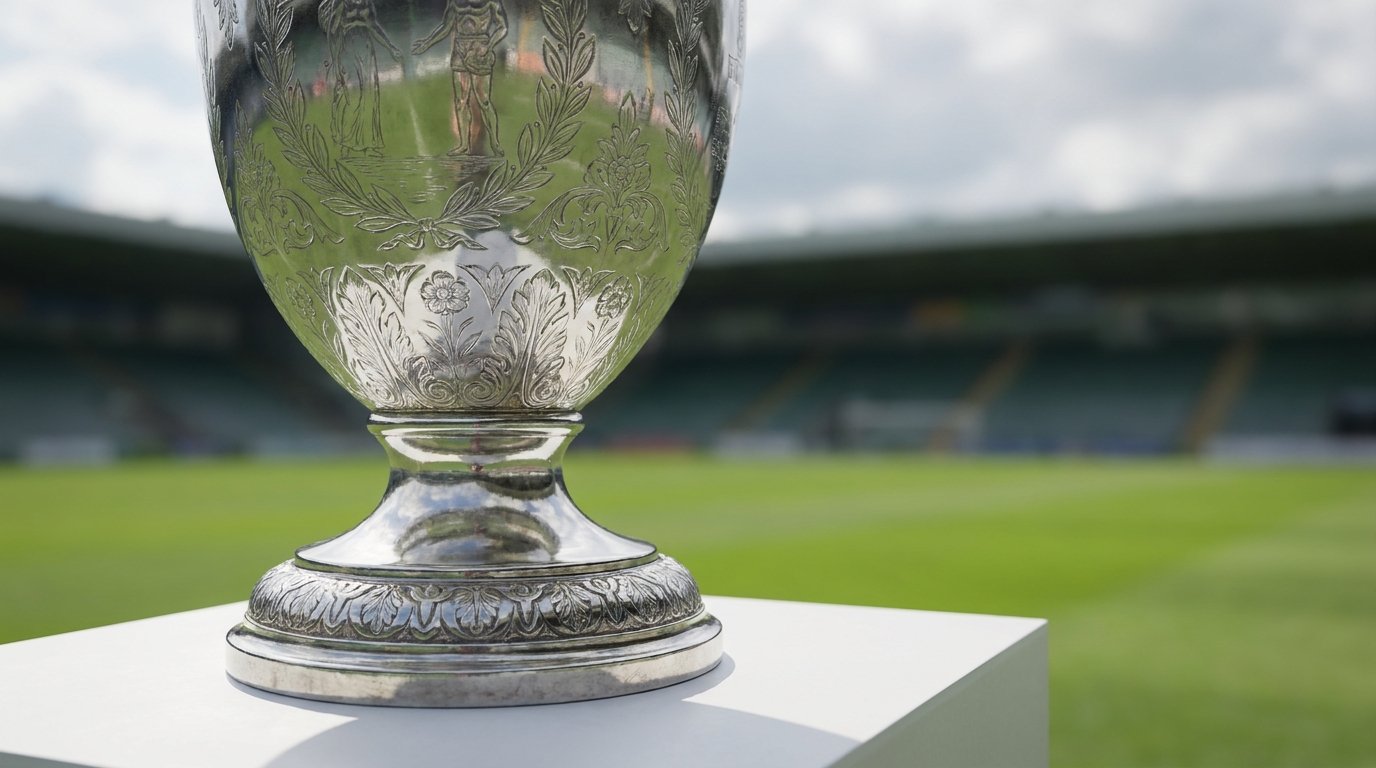
Official trophy replicas are made by licensed manufacturers who partner directly with federations and leagues such as UEFA and the Bundesliga. Federations, clubs, and sponsors work with these manufacturers under formal licensing agreements that give them the right to reproduce a trophy's exact design, proportions, and finish.
Only a handful of producers hold direct rightsholder agreements to reproduce trophies like the Ballon d'Or, the Bundesliga's New Meisterschale, or the UEFA Champions League and Europa League trophies. What separates a genuine licensed replica program from a novelty trophy shop is that combination of official rightsholder relationships, in-house sampling, and quality control at the manufacturing stage: the standard Am Ball works to as an official licensee of the Bundesliga, the DFB and UEFA, among others. Quality is checked where the piece is made: raw material first, then the sample, then the run. This guide breaks down who actually makes these replicas, how the licensing side works, and what buyers should check before commissioning one.
Key Takeaways
- Official trophy replicas require a direct licensing agreement with the rightsholder, not just skilled metalwork.
- Am Ball holds confirmed licenses for the Ballon d'Or and the UEFA Champions League and Europa League trophies, and is the exclusive licensee for the official replicas of the Bundesliga's New Meisterschale and the DFB-Pokal.
- Buyers commissioning replicas are almost always federations, clubs, sponsors, or event organizers, not individual fans.
- Lead times depend on the piece: a physical sample typically takes 2 to 3 weeks, and series production about 4 weeks after the sample is approved, with shipping on top.
- Evaluating a manufacturer means checking licensing status, sampling process, and quality control at the actual production facility, not just the sales pitch.
In This Article
- Key Takeaways
- What Is a Trophy Replica Manufacturer?
- Why Does Choosing the Right Trophy Replica Manufacturer Matter?
- How Does Official Licensing Shape Trophy Replica Production?
- Key Challenges and How to Overcome Them
- How Do You Evaluate a Trophy Replica Manufacturer?
- Real-World Example: Producing a Championship Trophy Replica
What Is a Trophy Replica Manufacturer?
A trophy replica manufacturer is a company that designs and produces authorized copies of an existing trophy, matching its shape, materials, and finish under a licensing agreement with the rightsholder. It differs from a generic awards company because the design is tied to a real, protected piece of intellectual property, usually owned by a federation, league, or an organization like Groupe Amaury and France Football Group in the case of the Ballon d'Or.
This distinction matters more than it sounds. Anyone with a metal shop can produce a shape that resembles a famous trophy. Only a licensed manufacturer can call the result official, sell it as such, or supply it to the rightsholder for genuine commemorative use. For how one of the most famous originals came about, see our history of the World Cup trophy.
Why Does Choosing the Right Trophy Replica Manufacturer Matter?
An unlicensed or poorly sourced replica creates legal exposure, brand risk, and inconsistent product quality for the organization that commissions it. Federations and clubs put their name on these objects. A cracked plating job or an off-proportion silhouette reflects badly on the rightsholder, not just the factory.
There's also a commercial angle. Licensing International's 2026 Global Licensing Industry Study put global sales of licensed merchandise and services at $389.8 billion in 2025, with sports the fastest-growing property category, up 8.5%. Trophy replicas sit inside that same licensing infrastructure: design approval, royalty terms, and quality standards set by the rightsholder.
For a federation, the buyer isn't chasing a one-off gift. They're building a program: commemorative pieces for sponsors, retail-ready miniatures, presentation trophies for regional competitions, and sometimes museum-grade display pieces. That requires a manufacturer built for repeat production, not a single custom order.
How Does Official Licensing Shape Trophy Replica Production?
Official licensing forces every design, material choice, and finish through the rightsholder's approval process before a single unit gets made. That approval chain is slower than open-market manufacturing, but it's what makes the final product defensible as "official."
Am Ball holds direct licensing agreements for the Ballon d'Or, the Bundesliga's New Meisterschale, and the UEFA Champions League and Europa League trophies. For the New Meisterschale and the DFB-Pokal, the license is exclusive. That gives it a working relationship with the actual design specifications and brand guidelines these organizations enforce, rather than a reverse-engineered approximation built from photographs.
The practical difference shows up at the sampling stage. A licensed producer submits physical samples for sign-off against reference dimensions and finishes before full production starts. An unlicensed shop skips that step entirely, because there's no rightsholder to approve anything.
Am Ball manages that full chain, from artwork and sampling through quality control at its manufacturing partners. You can see how that process works across product categories on Am Ball's product overview, which covers everything from collectibles to campaign merchandise built for federations, clubs, and event organizers.
Key Challenges and How to Overcome Them
Trophy replica manufacturing runs into a few recurring problems. Here's what tends to go wrong and how buyers avoid it.
Licensing verification. Plenty of vendors claim "official" status without a real agreement behind it. Ask for the actual rightsholder relationship, not a stock photo of a similar trophy on a product page.
Material and finish inconsistency. Silver-look finishes, plating thickness, and weight all vary between suppliers, and cheaper runs cut corners here first. Request physical samples before committing to a production quantity.
Lead time mismatches. Federations often need replicas timed to a season, a final, or an award ceremony. A manufacturer without predictable production scheduling puts that date at risk. Our guide to custom merchandise lead times shows how to count back from that date.
Scale beyond a single piece. Bespoke silversmiths can produce one exceptional trophy. Fewer of them can also produce a consistent run of 50 or 500 branded miniatures for retail or sponsor gifting without quality drifting between units.
How Do You Evaluate a Trophy Replica Manufacturer?
Evaluating a trophy replica manufacturer comes down to checking licensing status, production capability, and quality control before signing any agreement. Use these five criteria as a starting checklist. For named producers, see our overview of who manufactures licensed sports collectibles in Europe.
- Confirmed licensing agreement. Ask which specific trophies or competitions the manufacturer is licensed for, and get it in writing. "We've made replicas before" is not the same as holding a current license.
- Sampling and approval process. A serious manufacturer builds physical samples for sign-off before full production, matching reference specifications supplied by the rightsholder.
- Manufacturing transparency. Know where and how the piece is actually made. Ask about the factory relationship and who runs quality control at the production stage.
- Range of finishes and formats. Federations and sponsors need more than one product: full-size presentation pieces, scaled miniatures, and retail collectibles at different price points.
- Track record with comparable rightsholders. A manufacturer already trusted by federations like the Bundesliga or UEFA has already cleared the vetting process other organizations will put you through.
Am Ball fits that checklist because its licenses aren't limited to a single competition. Working across the Ballon d'Or, the Bundesliga New Meisterschale, and both UEFA club competitions means the same production infrastructure and quality control apply across multiple official programs, not just one.
Real-World Example: Producing a Championship Trophy Replica
Picture a national league that wants a run of scaled replica trophies for its title sponsor's regional partners, plus a smaller batch of premium pieces for club museum displays. Before working with a licensed producer, the league had been sourcing one-off pieces from a local trophy shop, with visible finish inconsistencies between batches and a six-month wait for a redo after the first run came back off-spec.
Moving to a licensed manufacturer changes the sequence. Design references come directly from the rightsholder's brand guidelines. Physical samples get approved before tooling starts. Production then runs to a fixed schedule, typically about 4 weeks once the sample is approved, depending on the finish and quantity, with quality checks built in at the manufacturing partner rather than caught after delivery.
That's the model Am Ball runs for its licensed programs, including trophy-adjacent collectibles tied to the Bundesliga's New Meisterschale and the UEFA Champions League and Europa League competitions. The federation gets a predictable timeline and a consistent product across every unit in the run, not just the first sample.
Frequently Asked Questions
How long does it take to produce a trophy replica?
It depends on the piece. As a guide, a physical sample typically takes 2 to 3 weeks, and series production about 4 weeks after the sample is approved, with shipping on top. Complex cast or hand-finished one-offs can take longer, so ask for a written schedule.
How much does an official trophy replica cost?
Costs vary widely based on size, material, and finish, ranging from modest retail miniatures to significantly higher prices for full-scale, hand-finished presentation pieces. Manufacturers typically quote per project once they know the size, material, quantity, and finish level required.
Can individual fans buy official trophy replicas?
Some officially licensed trophy replicas do reach retail channels through the rightsholder's approved merchandise programs, but most licensed manufacturers produce for federations, clubs, and sponsors rather than direct-to-consumer sales. If a specific replica is available to fans, it's usually sold through the official league or federation store, not the manufacturer directly.
What's the difference between a licensed and unlicensed trophy replica?
A licensed trophy replica is produced under a formal agreement with the rightsholder, with design approval and quality standards enforced throughout production. An unlicensed replica is a reverse-engineered copy made without that agreement, which carries legal risk for anyone selling it as official and offers no guarantee of design accuracy.
Conclusion
Official trophy replicas come from a narrow group of manufacturers with real, verifiable licensing agreements, not from anyone who can shape metal into a familiar silhouette. For federations, clubs, and sponsors commissioning this work, the license, the sampling process, and the quality control behind it matter more than a low quote.
Am Ball's licensed work across the Ballon d'Or, the Bundesliga New Meisterschale, and the UEFA Champions League and Europa League trophies puts it in that narrow group, with the production infrastructure to back a single commemorative piece or a full retail run.


